


Artificial intelligence-driven transformation of intralogistics: a multidimensional transformation from manual operations to intelligent collaboration
发布时间:Letter dated 19 January 2026 from the Permanent Representative of浏览量:217
With labour shortages,Supply chainVolatility and margin pressures overlap with internal logistics (Intralogistik) has become a key component of intelligent upgrading. Artificial intelligence (AI) technology is taking hold in every aspect of warehouses and distribution centres, and its impact is no longer limited to a single piece of equipment or process, but is profoundly changing job structures, collaboration patterns and career paths. Germany (Powerfleet) with Germany (PSI Logistics) and other companies demonstrate in practiceAIof multiple values, from security to predictive maintenance, from digital twins to process self-optimisation.AILet's move warehousing into“Intellectual collaboration”of a new era.
From data entry to data analysis: a leap in job value
In traditional warehousing operations, employees often need to invest a lot of effort in entering inventory data, updating the status of goods or manually proofreading shipping records. This type of work is not only repetitive, but also prone to errors.AIThe introduction of the changed this completely. Through intelligentSensorWith the data interface, the information of cargo in/out, location and status can be automatically collected and updated to form the“Credible source”的real time database。
On this basis, the role of the employee gradually changes from“data importer”change into“Data Analyst”. Their focus is no longer on mechanical entry, but on usingAIAnalytical reports are generated to identify inventory anomalies, determine trend fluctuations, and suggest improvement options. For example.AIAbility to automatically discover certain types ofSKUof outbound anomalies, employees can then further analyse changes in their supply chain links or customer demand. This transformation not only enhances the technical content of the position, but also provides a new value path for employees' career development.
From reactive response to predictive O&M: the stress-reducing“forward logic”
Equipment maintenance has always been a warehouse operation's“sore point”. In the traditional model, operators tend to intervene passively when equipment fails unexpectedly, bringing high pressure, overtime and downtime losses.AIThe ability to predict then allows problem solving from“Interim firefighting”fig. change one's stance“planned intervention”。
By monitoring the operating data of stacker cranes, conveyor belts and motors.AIParts wear trends can be predicted and maintenance warnings given in advance. This allows maintenance personnel to inspect or replace parts in a predetermined window, rather than waiting until a failure erupts. This kind of“forward logic”Not only does it reduce the risk of unexpected downtime, but it also makes maintenance more structured and significantly reduces stress and safety risks for employees.
Germany (PSI Logistics), it was emphasised thatAIOptimised predictive O&M can work withWarehouse Management System(WMS) seamlessly, automatically embedding maintenance schedules into daily operations to form a complete closed loop. Its Managing DirectorSascha TepuricStraight talk:“AIThe application has the potential to significantly reduce the project-based workload in planning and software implementation.——It's real.‘game changer’。”
From physically intensive to technically functional: the transformation of job patterns
In the past, the main body of warehousing positions are pickers and porters, and their work is based on physical operation. WithAIIn conjunction with automated systems, employees from“mechanical implementer”shift“system integrator”和“Automation equipment manager”。
For example, the introduction of autonomous mobile robots (AMR) After that, cargo handling and routing is done byAIThe algorithms are automated, and employees are responsible for monitoring the operational status of the robot population, handling exceptions, or maintaining theBatterywith sensors. This type of transition extends the career life of senior operators, who are able to build on their experience to move into technical positions and avoid early exit from the labour market due to physical strain.
United States (Powerfleet) in this areaSolutionsparticularly representative. ItsAIThe safety system dramatically improves safety in mixed pedestrian and vehicle environments by detecting people and vehicles directly through visual recognition, without relying on reflective clothing or wearable tags. This takes the work of frontline staff away from just“Avoiding risk”Instead, it's“How the oversight system manages risk”The role has shifted from passive to active.
From job silos to cross-domain collaboration: the creation of a global perspective
Traditional warehousing operations show significant“job island (as opposed military or police station)”: The pickers just pick, the packers just pack, and the team leaders are individually responsible for scheduling and processes.AIThe driven warehouse management system breaks down this fragmentation and enables cross-departmental information sharing through a unified data platform and process visualisation.
In this model, employees are able to see the operational status of the entire warehouse system: which goods are about to run out of stock, which orders have a higher priority, and which equipment is in a maintenance alert phase. This global view allows for closer collaboration between different positions. For example, pickers can know in advance the pressure on the packing stations so they can adjust their rhythm; shift leaders can coordinate tasks in real time to avoid overloading a particular section.
This shift not only improves theefficiencyIt also enhances the sense of ownership of the employees. Employees are no longer isolated parts on an assembly line, but are“System Collaboration Network”Part of the.
From Limited Pathways to New Career Opportunities:AICreating new jobs
AINot only has it transformed existing jobs, but it has also created a large number of new occupations. For example.AITrainingThe division is responsible for helping the system learn new modes of operation; the robotics coordinator specialises in managing theAMR与Automated Guided VehicleConvoyoperation; automation specialists are responsible for maintaining and optimising complex warehouse control systems (WCS)。
Based on research.94%of organisations believe that automation has significantly improved intralogistics efficiency, but currently only34%of companies actually investing in automated systems. This means that the new position is still in a rapid growth phase, and whoever can get a head start on developing and retaining theAIand automation complex, who will be able to take the lead in the future competition.
Germany (PSI LogisticsThe digital twin programme has made this trend tangible: itsPSIwms AIThe platform can simulate thousands of scenarios and write back the optimisation results in real time to theWMSExecution layer. This highly intelligent system requires“Digital Twin Analyst”and other new roles to manage and interpret, providing employees with broader career paths.
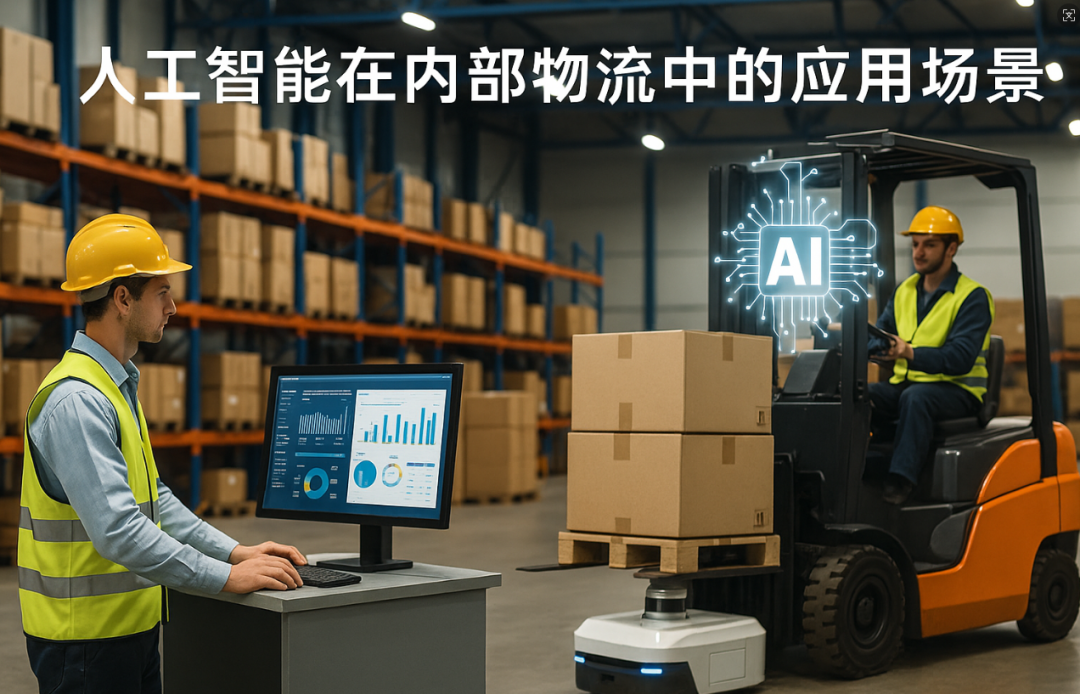
International Case Comparison: Differentiated Paths in Europe, the United States, Japan and China
In Europe.AIThe main focus is on combining warehouse management systems and automation equipment. Germany (PSI Logistics) and Germany (Jungheinrich) and other companies focus more on system wholeness, with digital twins, predictive operations and full process visualisation as entry points, highlighting“system integration”与“End-to-end efficiency”。
In the United States.AIFocus more on“Safety and fleet management”. United States (Powerfleet) and others emphasiseAIoTThe platform, which prioritises the safety of industrial vehicles and the mixing of people and vehicles, sells itself as a real reduction in accidents and downtime losses. This approach accommodates the heightened focus on compliance and safety in the North American market.
In Japan.AIApplications in warehousing place more emphasis on“Flexibility and Lean Manufacturing”. Japanese companies tend to putAIIntegration with sensors to achieve continuous improvement in small steps (Kaizen), such as throughAIOptimising picking paths, reducing waste or dynamically adjusting man-machine stations. This approach emphasises the maximisation of efficiency in the context of limited space and manpower, and is in line with the Japanese corporate“small but fine”The cultural context of the
In China.AIApplications in intralogistics are more scale and policy-driven in character. Companies such as China (Haikang Robotics), China (Quick Warehouse Intelligence), and China (Lidar Robotics) are bringing theAIwith large-scale warehouse networks, cross-border e-commerce and newEnergyManufacturing integration with an emphasis on“Scene Coverage+Replication at scale”. For example.AIScheduling algorithms unify the command of hundreds of units in a warehouse of tens of thousands of square metres.AMRvehicles to ensure conflict-free paths and optimal efficiency; and at the same time combining the national“double carbon target”Warehousing in large quantitiesAIThe system is embedded with energy monitoring and green operation modules. Under this framework, employees learn how to manage large-scale robot clusters and also have knowledge of green operations and maintenance. This feature shows that ChinaAIWarehousing more emphasis“systems+formulation+market (also in abstract)”of the Trinity.
A comparison shows that Europe focuses on system-level innovation, the United States emphasises safety and risk control, Japan favours flexible improvement and lean production, and China highlights scale-up and green transformation. Although the four paths have their own focus, they have the same common goal.——以AIImprove efficiency, reduce labour dependency and increase supply chain resilience.
AIReinventing not just technology, but organisational and talent strategies
As can be seen from the above multidimensionalAIis profoundly changing the way intralogistics works: automating data collection, moving maintenance forward, technologising jobs, networking collaboration and diversifying careers. It's not just about upgrading technology, it's about reconfiguring organisational and talent strategies.
AINot replacing employees, but freeing them from low value-added, repetitive labour and putting them into analytical, collaborative and innovative roles; not simply bringing algorithms online, but comprehensive change combined with process re-engineering, job transformation and training frameworks.
In the future, with securityAI, the widespread use of digital twins and predictive optimisation, intralogistics will move from the“Physically demanding service operations”take a step toward“Efficient systems for intellectual collaboration”. Companies that are able to capitalise on this transformational opportunity will build a compound advantage in efficiency, talent attraction and supply chain resilience.